Responsible Bivouacking
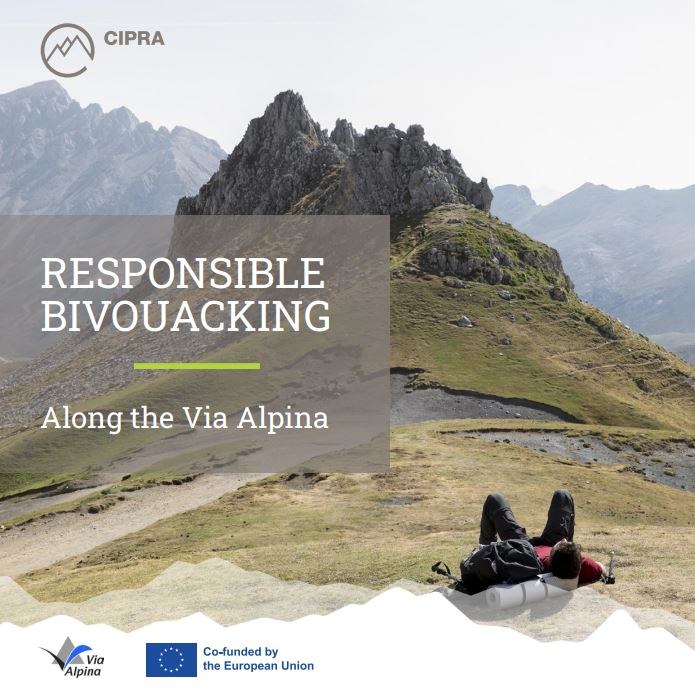
Bivouacking is becoming increasingly popular, but spending the night outdoors can be problematic, especially in sensitive Alpine regions. A free handbook from CIPRA provides guidance on environmentally friendly behaviour along the Via Alpina.
Bivouacking is not permitted everywhere in the Alpine region, with the rules varying from country to country and region to region. This is particularly relevant for long-distance hikers, such as those travelling along the Via Alpina. That is why CIPRA has developed an English-language handbook in collaboration with young people from all Alpine countries as part of the “Via Alpina Youth” project.
Bivouacking is usually prohibited in protected areas such as national parks – and with good reason: excessive disturbances will endanger rare plant species and wildlife habitats. Social media also play a role: particularly idyllic or spectacular photos of overnight stays in the open air often lead to imitation, and thus to the littering and pollution of the places shown – many of which are located in nature reserves or in areas prone to rockfalls.
The handbook explains the differences between bivouacking, tenting and camping, highlights legal regulations in Alpine countries, and presents alternatives such as trekking sites and bivouac boxes.
In the CIPRA podcast, Henriette Adolf explains what is important when spending the night outdoors and gives practical tips on how to behave in the most nature-friendly way possible.
Listen to the podcast (in German)
You can find a podcast transcript in English here.